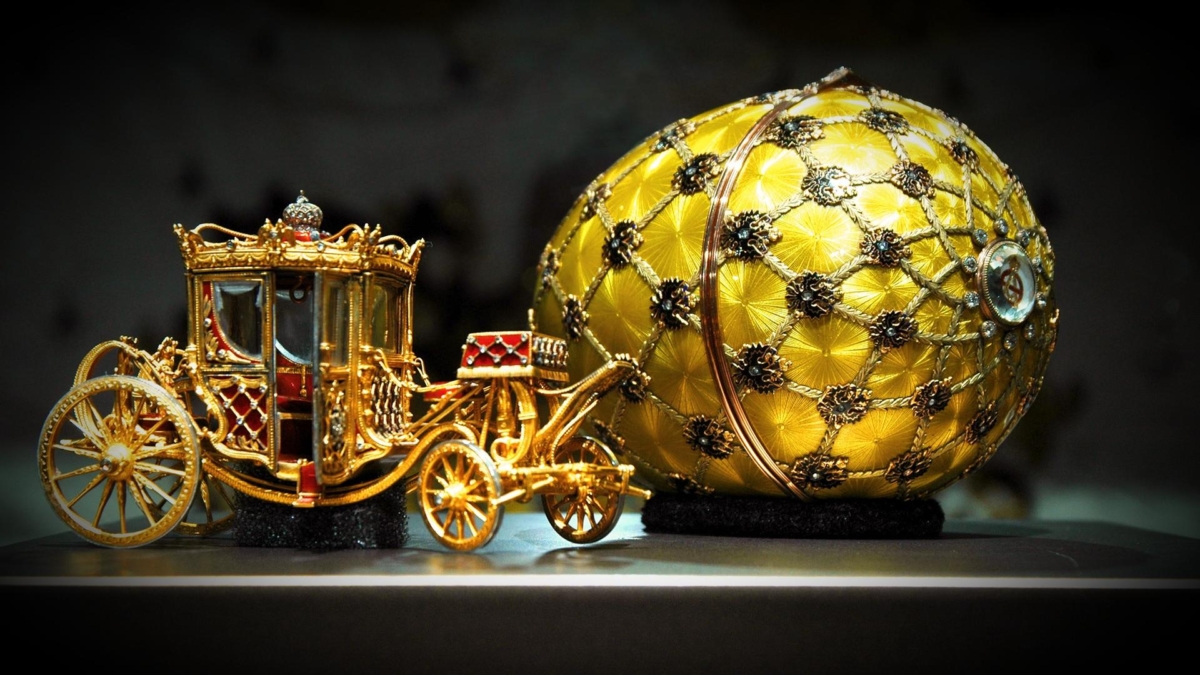
Coronation Egg, Photo Courtesy of Wikimedia Commons / Fabergé Discoveries
When most people think of Easter eggs, they picture colourful shells, chocolate treats, or family traditions. But one of the most famous Easter egg traditions in history is far more luxurious.
Fabergé eggs are ornate works of art made from precious metals, enamel, diamonds, and gemstones created for the Russian imperial family more than a century ago. Today, they are considered some of the most extraordinary examples of precious metal craftsmanship ever made.
Their story blends Easter symbolism, royal history and the enduring beauty of precious metals.
A Royal Easter Gift
The tradition began in 1885 when Tsar Alexander III of Russia commissioned jeweller Peter Carl Fabergé to create a special Easter gift for his wife, Empress Maria Feodorovna.
But this wasn’t just a random display of luxury. The design was inspired by a sentimental object from the empress’s childhood– a jewelled egg she had seen growing up in Denmark, passed down through her family.
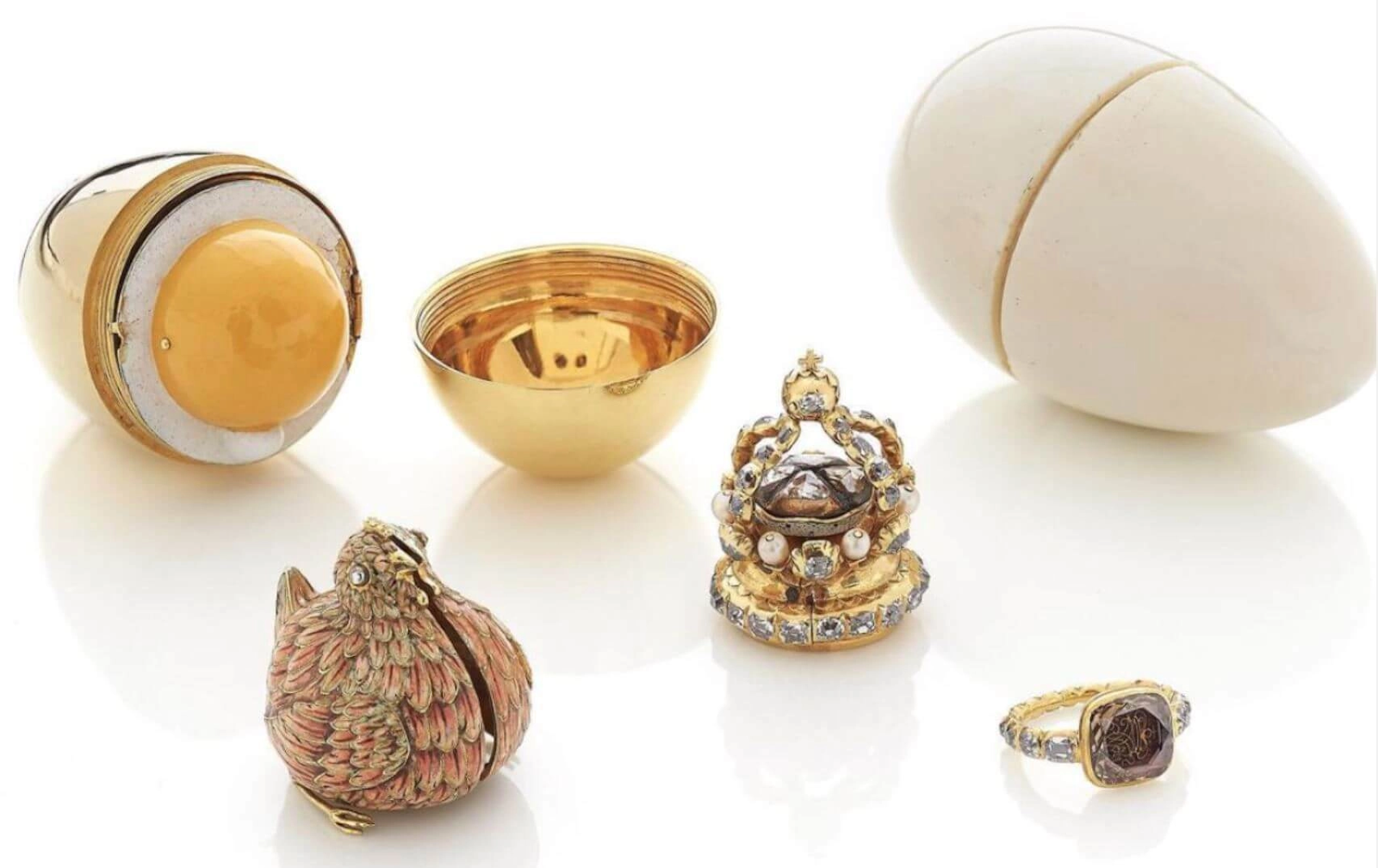
Alexandra Feodorovna Egg, Photo Courtesy of Iben Kaufmann
The empress loved it so much that the tsar ordered a new Fabergé egg every Easter.
This tradition continued under the next ruler, Nicholas II, who commissioned eggs for both his mother and his wife each year. Between 1885 and 1917, more than 50 imperial Fabergé eggs were created.
Each one contained a hidden surprise and took months to design and craft.
Masterpieces of Precious Metal Craftsmanship
What makes Fabergé eggs especially fascinating for precious metal enthusiasts is the extraordinary materials used to create them.
Most eggs were built around a structure of gold, sometimes combined with silver or platinum. Many were covered in colourful enamel layered over finely patterned metal surfaces. Others were decorated with diamonds, rubies, sapphires and emeralds.
The craftsmanship was astonishing. Inside some eggs were tiny mechanical creations, such as:
- Miniature gold carriages
- Clock mechanisms
- Folding picture frames
- Small working trains
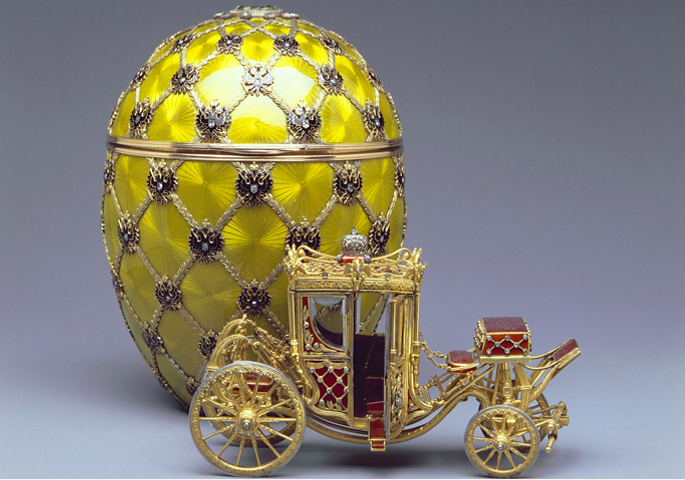
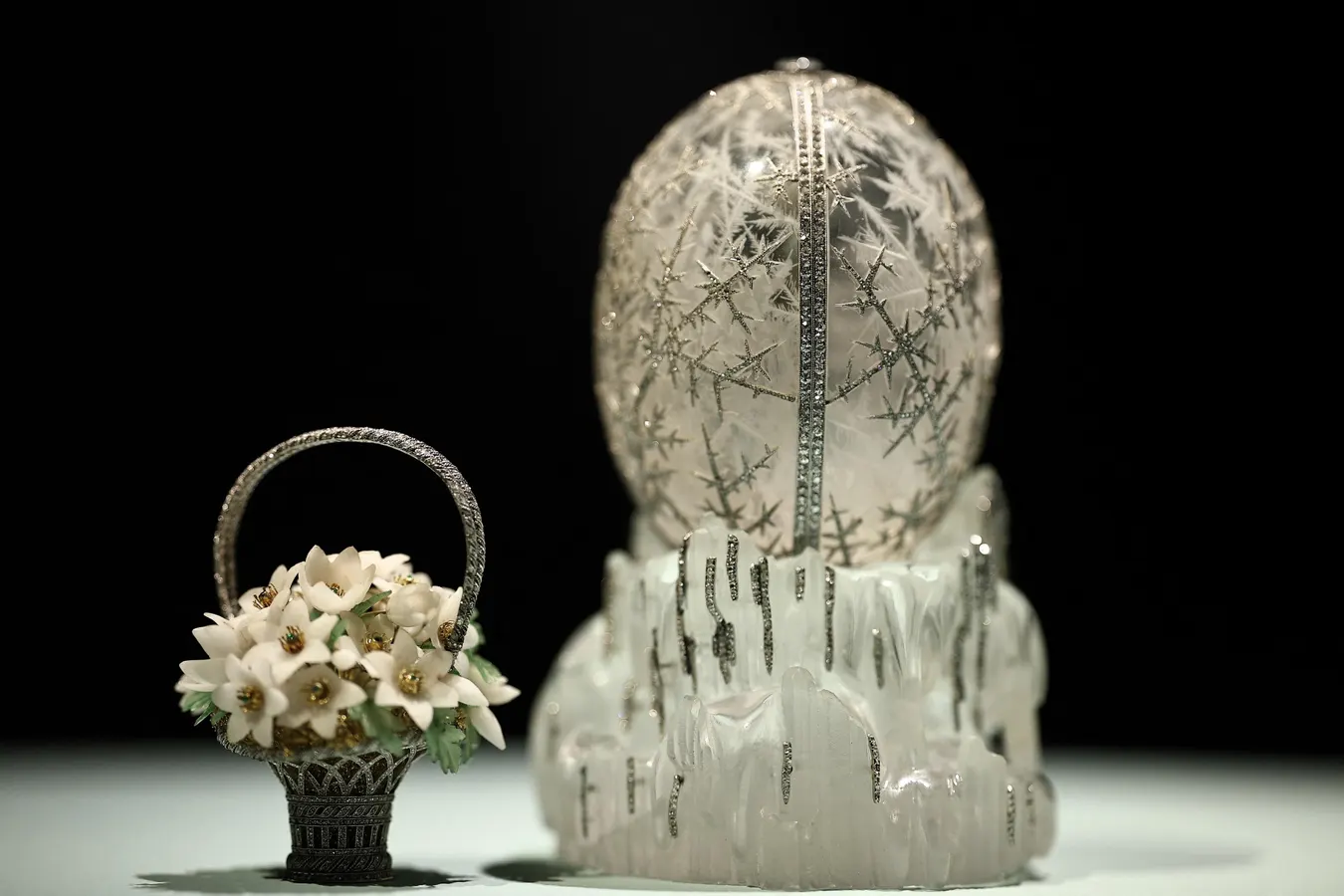
Coronation Egg, Photo Courtesy of Fabergé Discoveries / Winter Egg, Photo Courtesy of Henry Nicholls
One famous example is the Coronation Egg, which contains a detailed miniature carriage made of gold and platinum. Another remarkable piece is the Winter Egg, decorated with platinum snowflakes and more than four thousand diamonds.
These pieces weren’t just jewellery–they were tiny sculptures that combined engineering, artistry, and precious metals.
Why Eggs Became an Easter Symbol
The egg itself has long been a symbol of new life and renewal, which is why eggs are closely associated with Easter in many Christian traditions.
In Russian Orthodox culture, decorated eggs were exchanged during Easter celebrations as a symbol of the resurrection of Christ. The Romanov royal family simply elevated that tradition into something extraordinary.
Fabergé eggs kept the same symbolic idea but expressed it through the most luxurious materials available–gold, platinum, silver, enamel diamonds and gemstones.
From Imperial Treasures to Modern Collectibles
The Fabergé tradition came to an abrupt end after the Russian Revolution in 1917. The royal family was overthrown, and many of their treasures were seized and later sold around the world.
Today, the original imperial eggs are held in museums and private collections, with some selling for tens of millions of dollars.
While the original imperial commissions are finite, the legacy of Fabergé lives on through later works and modern pieces inspired by the same techniques, materials and attention to detail. These newer creations–often crafted in gold, silver and enamel–continue to reflect the artistry that made original eggs so iconic.
Recently, Canada Gold purchased a Fabergé Pill Box made by Victor Mayer in Germany–showing that these items are still circulating today and continue to hold both collectible and material value.
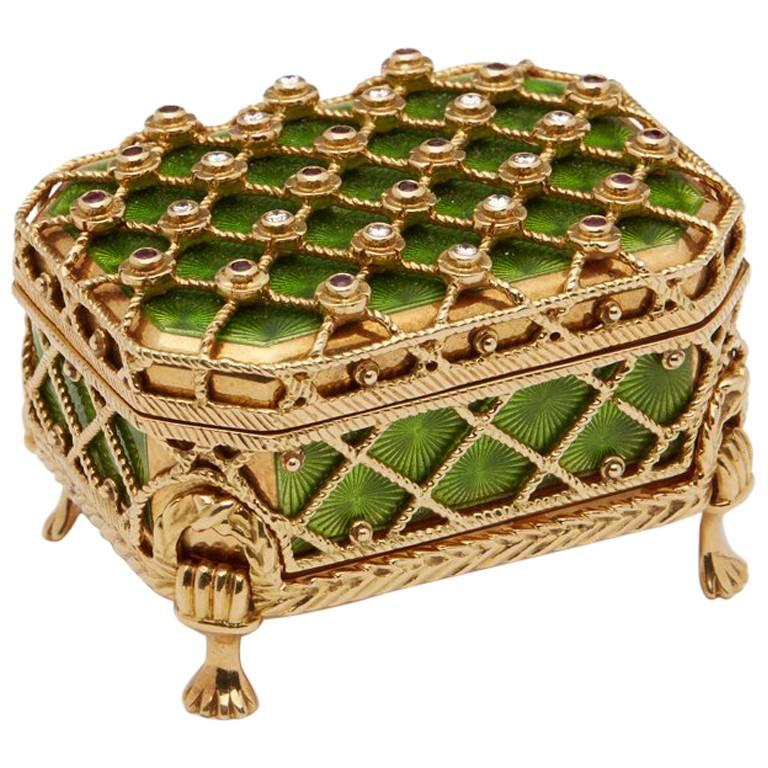
Fabergé Pill Box, Photo Courtesy of Phillips Auctions
Have Something Similar?
Not every valuable gold item looks traditional.
Some pieces–especially branded or collectible items–can carry value beyond just their gold content. If you have something unique and aren’t sure what it’s worth, an in-person evaluation is the best place to start.
At Canada Gold, we look at both metal and high-end craftsmanship to give you a clear and fair offer based on the current market.